Last updated: November 13, 2026
Selling Inherited or Family-Owned Land to a Data Center Developer
A lot of the land data center developers want is not owned by one person. It is the family farm that passed to four siblings, the acreage a grandparent left in a trust, or the parcel cousins have held together for thirty years without ever updating the deed. When a developer calls, the hard part is often not the price. It is getting everyone who owns the land to agree, and proving to a title company that the people signing have the right to sign. This guide walks through what a family needs to sort out, ideally before the first letter of intent arrives.
Quick answer
You can sell inherited or family-owned land to a data center developer, but every owner, or a person with legal authority for each owner, will have to sign the option or purchase agreement. Start by confirming who is on title and who has authority today (an executor, a trustee or the heirs themselves). For taxes, IRS Publication 551 says inherited property generally takes a basis equal to its fair market value at the date of death, which can shrink the taxable gain on a sale. If owners disagree, buyouts, entity agreements or, as a last resort, a court partition are the usual paths, and more than two dozen states now apply the Uniform Partition of Heirs Property Act to inherited family land.
Why Family Land Shows Up on Data Center Maps
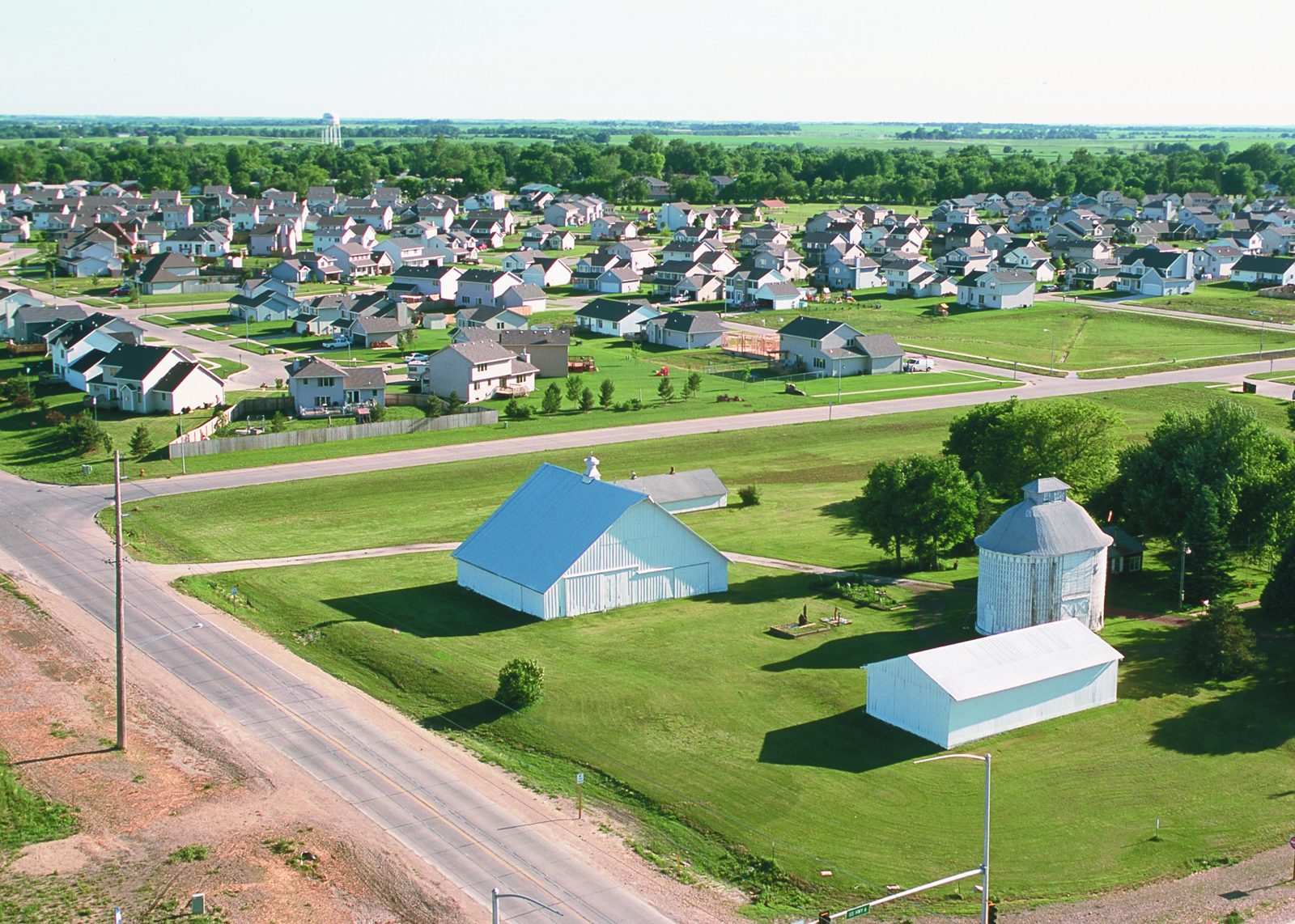
Data center developers look for large, mostly flat parcels near high-voltage transmission lines and substations, with room for buildings, cooling equipment and buffers from homes. In much of the country, the parcels that fit are rural tracts that have been in the same family for generations: farm ground, timberland, pasture and old homesteads that were never subdivided. Those are also the parcels most likely to have several owners, an estate that never fully closed, or a deed still in the name of someone who died years ago.
Developers know this. Many will still pursue a family parcel if the power and zoning look right, but they price in the time it takes to clear title and collect signatures. A family that can show a clean ownership picture early often gets taken more seriously than one that discovers its title problems in the middle of a due diligence period. Our data center site requirements guide covers what buyers screen for on the land itself.
None of this means an offer is coming. Most land near a power line never gets a data center call. But if your family is getting letters, or a neighbor already signed an option, it is worth knowing what would have to happen on your side before a deal could close.
Step One: Figure Out Who Actually Owns the Land
Families often know who they think owns the land. Title companies care about what is recorded. The two can be very different. The most common situations look like this:
- The estate is still open. An executor or personal representative may control the property until the estate is settled. Whether that person can sign a sale alone, needs the heirs to consent, or needs a court order depends on the will and on state law.
- The estate closed and the land passed to several heirs. The heirs usually hold the land together as co-owners. Every one of them, or their legal representative, will be needed to sign.
- Nobody ever probated the estate.The deed may still be in a deceased parent’s or grandparent’s name. Before anyone can sell, the family typically has to open or reopen an estate, or use whatever transfer procedure the state allows, to get title into the living owners.
- The land is in a trust.The trustee generally has the power to sell, subject to the trust document and the trustee’s duties to the beneficiaries.
- The land is in a family LLC or partnership. The operating agreement decides who can sign and whether members have to vote first.
- A parent has a life estate. A surviving parent may have the right to live on and use the land for life, with the children holding the remainder. Both interests usually have to join a sale.
A title search costs far less than a failed deal. If you are unsure which situation you are in, a local title company or real estate attorney can pull the chain of title and tell you who the record owners are. The issues we see most often on rural land, from missing heirs to severed mineral rights, are covered in our guide to data center land title issues.
The Family Readiness Checklist
Who is on title today
Pull the current deed and any recorded estate documents. If a parent died years ago and the deed was never updated, the land may still be in the decedent's name, which has to be fixed before anyone can sign.
Who has authority right now
If the estate is open, the executor or personal representative may control the land. If it closed, the heirs named in the deed or court order do. Trust land is controlled by the trustee under the trust document.
How each owner holds title
Tenants in common, joint tenants, a life estate with remainder interests, or an entity. Each one changes who signs and what happens if an owner dies during a long option.
Date-of-death value
An appraisal as of the date of death supports the stepped-up basis described in IRS Publication 551 and gives the family a neutral starting number.
Leases and existing agreements
Farm leases, hunting leases, timber contracts, solar or wind options, pipeline and transmission easements. A data center buyer will ask for all of them.
One family contact
Pick one person to receive calls and share information with everyone in writing. Developers move faster, and families argue less, when nobody is negotiating alone.
Site intake
Family land near transmission lines or a substation?
Data center developers are paying premiums for powered land — get a realistic read on your parcel. Free, no obligation unless a deal closes.
One family member can send the address and acreage for a confidential review against the power, zoning and acreage criteria data center buyers use. It is not a listing and nobody is committed to anything.
Your information is reviewed privately. A submission is not a listing, and it does not obligate you unless a deal closes.
Why Every Signature Matters on a Data Center Deal
Data center land deals usually start with an option or a purchase agreement that has a long study period. The developer pays to hold the land while it checks power availability, zoning, environmental conditions and the interconnection process, and only closes if the site works. Our pages on data center land option agreements and the timeline from inquiry to close explain those stages.
For a family, the length of that period is the risk. An option that runs a year or more gives plenty of time for an owner to die, divorce, file for bankruptcy or simply change their mind. Buyers protect themselves by requiring every owner to sign at the start and by recording a memorandum of the option. Families can protect themselves by agreeing in writing, before signing, on how option payments will be split, who will speak for the family, and what happens to an owner’s share if they die during the option.
A buyer will not usually accept a fractional interest. One sibling can generally sell or lease their own undivided share, but a developer building a campus needs to control the whole parcel. That is why a single holdout can stop a deal, and why it pays to have the conversation inside the family before an outsider is waiting on an answer.
Taxes: Stepped-Up Basis and Why the Date of Death Matters
The tax picture for inherited land is often better than families expect. IRS Publication 551 (Basis of Assets, revised December 2025) says the basis of property inherited from a decedent is generally the fair market value of the property at the date of the person’s death, or on the alternate valuation date if the estate’s personal representative chose to use it. Two other rules can apply to farmland: the special-use valuation method for real property used in farming or a closely held business, if it was elected for estate tax purposes, and special treatment for land under a qualified conservation easement.
In plain terms, if a grandparent bought a farm decades ago and it was worth far more when they died, the heirs’ starting point for measuring gain is usually the value at death, not the old purchase price. Publication 551 also notes that when an estate had to file a federal estate tax return (Form 706), beneficiaries generally receive a Schedule A (Form 8971) reporting the estate tax value, and certain beneficiaries must use that value as their initial basis. If there was no Schedule A, the publication says basis can be determined using the appraised value at the date of death for state inheritance or transmission tax purposes.
That makes a date-of-death appraisal one of the most useful documents an inheriting family can have, especially if the land now draws data center interest at a much higher price. Land that was gifted during life is treated differently from land that was inherited, and selling through an entity, using an installment sale or doing a 1031 exchange each change the math. Our guide to capital gains tax and 1031 exchanges for data center land sales covers the broader options. This page is general information, not tax advice, so take your specific facts to a CPA or tax attorney.
When Family Members Disagree
Disagreement is normal. One sibling farms the land and does not want to stop. Another lives out of state and would rather have cash. A third is attached to the house. A data center offer, often well above farm value, tends to bring those differences to the surface quickly. Families usually work through it in one of a few ways:
- Buyouts. The owners who want to sell, or the ones who want to keep the land, buy out the others at an agreed value. An independent appraisal helps.
- Carving out a homestead. If the buyer only needs part of the parcel, the house and a few acres may be surveyed off and kept. Buyers vary on whether they want residences next to a campus, so this is a negotiation, not a given.
- A written co-ownership or entity agreement. Moving the land into an LLC, or recording an agreement among co-owners, can set voting rules so one person cannot block every decision. It needs legal and tax advice first.
- Partition. If nothing else works, a co-owner can usually ask a court to divide the land or order it sold. It is slow and expensive, and it is the outcome most families are trying to avoid.
Heirs’ Property Laws and Forced Sales
Families with inherited land should know about the Uniform Partition of Heirs Property Act. The Uniform Law Commission drafted it in 2010 to protect families from forced partition sales, including sales started by an outsider who buys one relative’s small share. Georgia was one of the first states to adopt it, in 2012. An April 2026 Urban Institute brief counted 26 states that had enacted it as of February 2026, and Rhode Island’s governor signed it on June 19, 2026, for partition actions filed after January 1, 2027.
The details vary by state. Rhode Island’s version, for example, treats land as heirs’ property when there is no agreement binding all the co-owners on partition, at least one co-owner got title from a relative, and relatives hold at least 20 percent of the interests, or make up at least 20 percent of the co-owners, among other tests. In those cases, the court has to determine the land’s fair market value, other co-owners get a chance to buy out the share of whoever asked for the sale, and the court has to consider dividing the land before ordering it sold.
Why this matters for data center deals: if someone approaches one relative to buy their share cheaply, or if a family dispute heads to court, these protections can change the outcome. Check whether your state has adopted the act, and get a local real estate attorney involved before anyone signs away a fractional interest.
Red Flags When a Buyer Approaches One Relative
- An offer to buy one heir’s share, rather than the whole parcel, from a buyer who will not say who they represent.
- Pressure to sign quickly, before the rest of the family has seen the paperwork.
- A short deadline paired with an unusually high headline price and no study period or deposit terms.
- Requests to sign a quitclaim deed, power of attorney or assignment you have not had reviewed.
- An agreement that gives the buyer the right to assign the deal to an unnamed third party without telling the family.
Legitimate developers often do keep their names quiet early on, and many use land agents. That is normal. What should not happen is one relative being pushed to sign alone. If you received a letter or call, our page on what to do if a data center makes an offer on your land walks through how to respond.
How to Talk About Value as a Family
Families argue most about price, and the easiest way to lower the temperature is to agree on how value will be judged before a number is on the table. Farm value, a date-of-death appraisal and a data center offer are three different things. The first reflects the land as it is used today. The second sets the tax starting point. The third reflects what a particular buyer will pay if power and zoning work out, and it may never close.
What drives a data center price is mostly outside the family’s control: distance to usable transmission, available capacity, zoning, acreage and the buyer’s timeline. Our guide to how much your land is worth to a data center developer explains those drivers. Sharing one written summary with every owner keeps the conversation about the same facts.
Frequently Asked Questions
Can one sibling sell inherited land to a data center without the others?
Generally no. When land passes to several heirs, they usually hold it as co-owners, and a buyer needs every owner, or someone with legal authority for each owner, to sign. One co-owner can usually sell or lease only their own undivided share, and a data center developer has no use for a fractional interest in a parcel. Expect the buyer's title company to require signatures from every person on title, or a court order, before closing.
Can we sign a data center option agreement while the estate is still in probate?
It depends on the state, the will and the powers the court has given the executor or personal representative. Some representatives have authority to sell estate real estate; others need court approval or the consent of the heirs. Before signing anything, ask the estate's attorney who has authority to bind the property today, and whether a sale needs court approval. A developer's title company will ask the same question.
How are taxes figured when we sell land we inherited?
IRS Publication 551 says the basis of property inherited from a decedent is generally its fair market value on the date of death, or on the alternate valuation date if the estate elected it. Gain is usually measured from that basis, not from what the original owner paid decades ago. If the estate filed Form 706, beneficiaries may receive a Schedule A (Form 8971) that sets the value they must use. A date-of-death appraisal is often worth having. Talk with a CPA or tax attorney about your own facts.
What if one heir refuses to sell?
Families usually try buyouts, a recorded co-ownership agreement, or carving out the holdout's share if the land can be divided. A co-owner can also ask a court to partition the property, either by dividing it or ordering a sale. In states that have adopted the Uniform Partition of Heirs Property Act, inherited family land gets extra protections in a partition case, including a court valuation and a right for other co-owners to buy out the share of the person who asked for the sale.
Should our family form an LLC before negotiating with a data center developer?
Some families put inherited land into an LLC or similar entity so one manager can negotiate and sign under rules everyone agreed to. That can make a long option period easier to manage. It also has tax, liability and transfer consequences, and moving land into an entity can affect basis, property tax treatment and title. It is a question for your attorney and CPA, ideally before an offer is on the table.
Does submitting our land to PowerReadySites require every owner's consent?
A submission is a confidential review request, not a listing or a sale. One family member can send the address and acreage so the family can learn how the parcel looks against data center criteria. Any agreement with a buyer would still need every owner, or someone with authority for them, to sign.
Sources: IRS Publication 551, Basis of Assets (rev. December 2025), “Inherited Property”; Urban Institute, “The UPHPA and Its Impact” (April 2026); Rhode Island Public Law 2026 ch. 206 (H 7210), Uniform Partition of Heirs’ Property Act. This page is general information, not legal or tax advice.
Site intake
See how your family's land looks to a data center buyer
Data center developers are paying premiums for powered land — get a realistic read on your parcel. Free, no obligation unless a deal closes.
Submit the parcel for a free, confidential review against the criteria developers use. Share the results with everyone who owns it before anyone decides anything.
Your information is reviewed privately. A submission is not a listing, and it does not obligate you unless a deal closes.
Landowner path
Own power-adjacent land?
Guides on this site explain what developers look for. The intake is how you get a realistic read on a specific parcel — free, and no obligation unless a deal closes.
- What interconnection queues mean for landowners
- Land near substations
- Selling land to data center developers
- Site requirements
- Indiana
- Ohio
- North Carolina
- Georgia
- Texas
- Boone County, IN — Lebanon / LEAP
- St. Joseph County, IN — New Carlisle
- LaPorte County, IN — Kingsbury / Michigan City
- Licking County, OH — New Albany corridor
- Catawba County, NC — Maiden
- Richmond County, NC — Hamlet–Rockingham
- Submit your parcel