Last updated: November 10, 2026
Selling Land for a Substation: What to Know When a Utility or Developer Calls
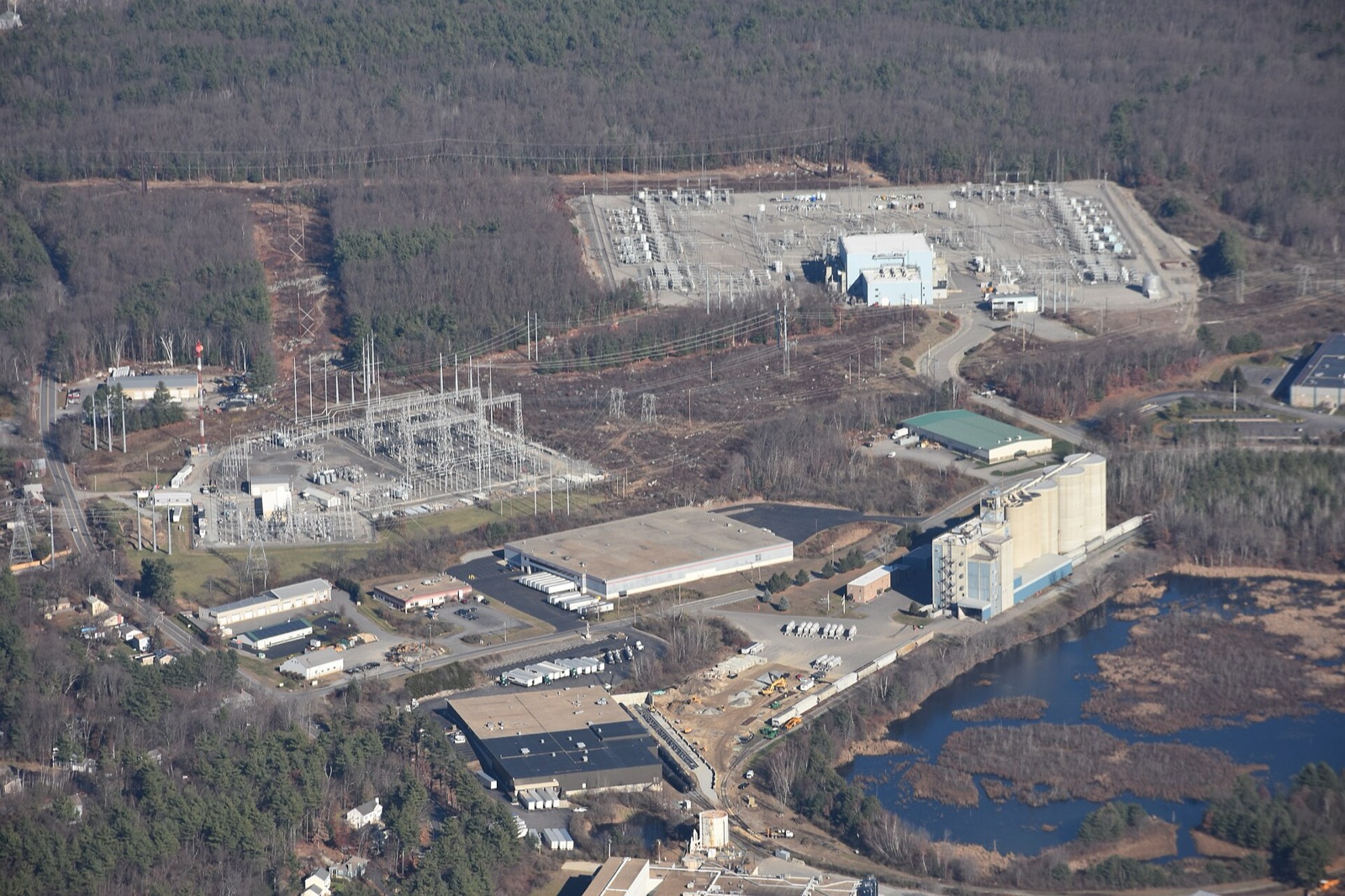
A substation is a small piece of ground with an outsized job. It is where high-voltage transmission power is switched and stepped down, and on a data center campus it is usually the first thing that has to be sited and the last thing that can move. If a utility land agent or a data center developer has asked about a few acres of your property for a substation, you are holding something scarcer than ordinary acreage. This page explains who buys these sites, how the deal is usually split, what recent public deals show about price, and what to settle before anything is signed.
⚡ TL;DR — A Substation Inquiry on Your Land
- • Two kinds of buyer: the utility itself, or a data center developer that buys the campus and later hands the substation lot to the utility.
- • The yard is usually a sale; the lines and road are usually easements. Price each one separately.
- • Public deals swing wildly, from $4,000 an acre in a 2026 Pennsylvania utility valuation to $45 million for about 13 acres in Loudoun County, Virginia.
- • Utilities can usually condemn; most private developers cannot. Know which one you are talking to.
- • Ask what the substation does for your remaining land before agreeing to a carve-out.
Why Substation Ground Is Different From the Rest of Your Acreage
Most land is valuable for what can be built on it. A substation site is valuable for where it sits. It has to be reachable by existing or planned transmission lines, it has to be close to the load it serves, and it needs a buildable, well-drained pad with year-round truck access for transformers that can weigh far more than normal construction loads. Once a utility has engineered a line route to a particular spot, a parcel a mile away is not a drop-in substitute.
Data center growth has multiplied the number of these sites. A single large campus can need its own high-voltage station. In Loudoun County, Virginia, the State Corporation Commission’s final order on Dominion Energy’s Apollo–Twin Creeks project approved roughly 1.9 miles of new 230 kV double-circuit line feeding five new 230–34.5 kV substations, all “on property to be obtained by the Company,” with a required in-service date of September 30, 2028. That is five substation parcels for one short corridor, driven by data center customers whose demand the existing distribution network could not serve.
If you are still figuring out whether your property is even in the conversation, start with our guide to land near substations, which explains what developers read off a utility map. This page assumes someone has already asked about putting a substation on your land.
Who Is Actually Buying: Three Common Structures
🏢
Utility buys direct
The utility picks the site, makes a purchase offer, and takes title. Common for stations serving general growth, and it happens on data center campuses too.
🏗️
Developer buys, then conveys
A data center developer options or buys the whole property and later deeds the substation lot to the utility to the utility's specifications.
🔌
Developer builds, utility takes over
Where the utility allows it, the customer builds the station to utility standards and transfers it with the land under it, under an interconnection agreement you will rarely see.
The utility-direct route is the most familiar. In Ellis County, Texas, a March 2026 brokerage announcement described a land sale to Oncor Electric Delivery for a substation and switch station on its new 765-kV transmission project, near the existing Stainback 345-kV substation; the broker then began marketing up to 1,600 surrounding acres for data center development. In Casa Grande, Arizona, the city manager said the utility APS had acquired roughly 80 acres for a future substation between two farmland holdings that were seeking data center entitlements.
The developer route is more common on purpose-built campuses. You may sign an option on 200 acres and only later learn that 10 of them are earmarked for the utility. That is not necessarily bad news, but it matters: the price you negotiated for the whole parcel may already include the substation lot, and the developer may be the one deciding how big it is. If you are at that stage, our guide to data center land option agreements covers the clauses that govern later carve-outs and assignments.
The Yard Is a Sale. The Lines and Road Usually Aren’t.
A substation is fenced, grounded, and operated for decades, so utilities generally want to own the yard outright. Everything that reaches the yard is a different conversation. Transmission and distribution lines into the station, the access road, drainage outfalls, and sometimes a temporary construction laydown area are typically handled as easements or temporary rights. Each one burdens the land you keep.
| Piece | Typical form | What you give up |
|---|---|---|
| Substation yard | Sale (fee simple) | Ownership and all use of the fenced area |
| Line corridors | Permanent easement | Building, tall trees, and some uses inside the strip |
| Access road | Permanent easement or included in the sale | Free use of the route; may split a field |
| Construction area | Temporary easement | Use during construction; restoration should be spelled out |
Landowners lose money when these get bundled into one per-acre figure for the yard. Ask for a price on each piece and a separate line for damage to the remainder, meaning the loss in value of the land you keep because a road now crosses it or a line now limits where you can build. Our page on easements and right-of-way goes through the terms that make an easement narrow or open-ended.
Site intake
Asked about a substation on your land?
Data center developers are paying premiums for powered land — get a realistic read on your parcel. Free, no obligation unless a deal closes.
Submit the parcel for a confidential read on what the substation could mean for the acreage you keep, and whether it belongs in front of data center buyers.
Your information is reviewed privately. A submission is not a listing, and it does not obligate you unless a deal closes.
What Public Deals Show About Price
Very few substation land prices are published, and the ones that are sit at opposite ends of a wide range. That is the honest answer to “how much per acre?” Here is what has been reported:
- Loudoun County, Virginia (2025): a JK Land Holdings affiliate sold 13.3 acres of its Twin Creeks land to Dominion Energy for $45 million, reported by Northern Virginia Magazine citing the Washington Business Journal. The remaining 97 acres, approved for five data centers, later sold for $615 million, a county record above $6 million per acre.
- Carbon County, Pennsylvania (October 2026): PPL Electric Utilities sent Jim Thorpe borough a packet valuing about 17 acres of watershed land for a distribution substation at $4,000 per acre, according to the Times News.
- Ellis County, Texas (2026): Oncor bought land for a 765-kV/345-kV substation and switch station; the price was not disclosed in the announcement.
- Casa Grande, Arizona (2026): APS acquired about 80 acres for a future substation; the price was not given in the coverage.
Read those as boundary markers, not comps. The Loudoun parcel was entitled data center land in the tightest power market in the country, and the substation is what made the rest of the campus worth $615 million. The Pennsylvania figure was a utility’s opening valuation for a local distribution station on watershed land, and borough council members openly asked whether it was fair. Most substation sites will land somewhere in between, and where depends on what the station serves.
The useful questions for your own number: Is the substation serving a specific data center project, or general load growth? Is the rest of your land part of that project? Is the parcel already zoned for industrial use? What voltage is involved? Land tied to 230 kV or higher transmission tends to interest data center buyers far more than land on a local feeder. Our guide to what your land is worth to a data center developer walks through those value drivers.
Eminent Domain Sits in the Background
Regulated electric utilities generally hold condemnation power under state law, and it can reach substation sites as well as line corridors. Most acquisitions still close by agreement, but the possibility shapes every negotiation. In July 2026, an Entergy Arkansas official told a county planning board that if the utility and a landowner could not agree on rights for lines serving a proposed data center, it would initiate condemnation and a circuit judge would determine the fair valuation.
Some states give landowners specific notice rights before talks begin. The Times News reported that in Pennsylvania an electric utility must mail property owners a disclosure notice by certified mail and wait at least 15 days before negotiating, and that the notice must state the utility’s condemnation power, the owner’s right to counsel, the right to refuse an offer, and the right to a public hearing. Texas requires entities with eminent domain authority to provide the Landowner Bill of Rights, and utilities such as CPS Energy say in their project FAQs that they offer fair market value for the property rights they acquire.
Two practical points follow. First, a private data center developer usually cannot condemn your land on its own, so a developer-led substation carve-out is a voluntary negotiation. Second, when the utility is the buyer, refusing to talk rarely makes the project go away; it moves the price question to a court. Our transmission line eminent domain guide explains how compensation is typically set when it gets that far.
How the Process Usually Unfolds
- 1
First contact. A land agent asks for permission to survey or study. Granting survey access is not agreeing to sell, but read the access letter for damage and restoration terms.
- 2
Site studies. Soil borings, wetlands and flood checks, and a preliminary footprint. Expect the location to shift while the line route is finalized.
- 3
Offer or option. A utility often makes a purchase offer once the site is chosen. A developer more often starts with an option on the larger property.
- 4
Approvals. Depending on the state and voltage, a utility commission, local zoning board, or both may need to approve the station and lines. Those hearings are public.
- 5
Subdivision and closing. The yard is surveyed out as its own lot, easements are recorded, and the sale closes. Construction can follow years later.
The PPL example shows how early these conversations can start. Jim Thorpe council members noted that the final substation location might not yet be set when the utility asked to survey. That is common, and it is a reason not to treat a preliminary sketch as the deal.
Settle These Before You Sign
Final footprint
Acreage and boundaries on a survey, plus any future expansion area the utility wants to reserve.
Line easements
Width, voltage, number of circuits, and whether the utility can add lines later in the same corridor.
Access road
Route across your remaining land, who maintains it, and whether you can use or cross it.
Who takes title
Utility, developer, or a developer that later conveys to the utility.
Separate prices
One number for the yard, one per easement, plus damages to what you keep.
If it dies
Return of deposits, restoration after borings and surveys, and release of any recorded option.
Taxes deserve their own call. A substation sale to a utility with condemnation power may qualify for different treatment than an ordinary sale, and farmland enrolled in a preferential assessment program can trigger rollback taxes when a piece is carved out. Talk to a tax advisor before closing, and see our page on capital gains and 1031 exchanges for data center land for the questions to bring.
The question most landowners forget to ask
What does this substation do for the land I keep? A high-voltage station on your property can turn the remainder into some of the most sought-after powered land in the county, or it can leave you with a field split by an access road next to a fenced utility yard. The answer depends on the station’s voltage, its spare capacity, who it is built for, and whether the utility will serve another large customer from it. Ask before you agree to the footprint, not after.
Frequently Asked Questions
Who buys land for a substation, the utility or the data center developer?
Both happen. Sometimes the utility buys the substation parcel directly, as Dominion Energy did at Twin Creeks in Leesburg, Virginia, and as Oncor did in Ellis County, Texas, for a 765-kV project. More often on a data center campus, the developer buys or options the whole property and later conveys the substation lot to the utility to the utility's specifications. Ask early, in writing, which entity will take title to the substation yard, because that decides who you negotiate with and whether condemnation power is in the background.
Do utilities buy substation land outright or take an easement?
For the fenced yard itself, utilities usually want to own the land outright, because the equipment stays for decades and the utility needs permanent control over access, grounding and security. Transmission lines into the station and access roads are commonly handled as separate easements. Treat the yard sale and each easement as separate pieces with separate compensation rather than one bundled number.
Can a utility take my land for a substation by eminent domain?
Regulated electric utilities generally have condemnation authority under state law, and it can extend to substation sites as well as line corridors. Entergy Arkansas, for example, said publicly in July 2026 that if it cannot reach agreement with a landowner on data center transmission rights, it will file condemnation and a circuit judge will set the value. A private data center developer usually does not have that power on its own. State procedures differ, so have a local attorney confirm what applies to your parcel.
How much do utilities pay per acre for a substation site?
There is no standard rate. Reported deals range enormously: PPL valued about 17 acres of Pennsylvania watershed land for a distribution substation at $4,000 per acre in an October 2026 packet, while Dominion paid $45 million for roughly 13.3 acres of approved data center land in Loudoun County, Virginia, in 2025. Location, the voltage being served, zoning, and whether the parcel is part of a larger data center campus drive the number. An independent appraisal that considers highest and best use is the starting point.
Should I sell the substation site separately from the rest of my land?
Sometimes the substation is what makes the rest of the property valuable to a data center developer. Selling a small yard to the utility first can raise or lower the value of the remainder depending on what the substation is built to serve and how the access road and lines cross what you keep. Before agreeing to a carve-out, ask how the remainder parcel will be accessed, what setbacks the station imposes, and whether you can market the rest as powered land.
What should I ask for in writing before signing?
The final substation footprint and acreage on a survey, not a sketch; the route and width of every line and access easement; who takes title; the price for the yard and each easement separately; who pays for subdivision, survey and closing costs; crop, fence and drainage damage terms during construction; and what happens if the project is cancelled before closing.
General information, not legal, tax, or appraisal advice. Rules on condemnation, notice, and compensation vary by state. Consult your own attorney and advisors before signing any agreement.
Site intake
Find out what the rest of your land is worth
Data center developers are paying premiums for powered land — get a realistic read on your parcel. Free, no obligation unless a deal closes.
Submit your parcel for a confidential review against the criteria data center developers use. A submission is not a listing and does not obligate you.
Your information is reviewed privately. A submission is not a listing, and it does not obligate you unless a deal closes.
Landowner path
Own power-adjacent land?
Guides on this site explain what developers look for. The intake is how you get a realistic read on a specific parcel — free, and no obligation unless a deal closes.
- What interconnection queues mean for landowners
- Land near substations
- Selling land to data center developers
- Site requirements
- Indiana
- Ohio
- North Carolina
- Georgia
- Texas
- Boone County, IN — Lebanon / LEAP
- St. Joseph County, IN — New Carlisle
- LaPorte County, IN — Kingsbury / Michigan City
- Licking County, OH — New Albany corridor
- Catawba County, NC — Maiden
- Richmond County, NC — Hamlet–Rockingham
- Submit your parcel